Harveer Sahni

Harveer Sahni
Author Harveer Sahni

Avery Dennison

Avery Dennison
Sustainability at Avery Dennison
Showing posts with label Mark Andy. Show all posts

Tuesday, February 17, 2026

Die Cutting in PSA Labels: From Stan Avery's Innovation to Modern Laser Technology-Part 1


The pressure-sensitive adhesive labels industry owes its existence to a struggling clerk working in a loft above a flower shop in downtown Los Angeles. In 1935, Ray Stanton Avery, who went by name Stan, was living in near poverty, residing in a rented chicken coop while working at the Midnight Mission to pay his way through college. What he created with a $100 loan from his fiancée Dorothy Durfee would transform how products are labeled worldwide and launch an industry that today generates billions in revenue.

The Genesis: Stan Avery's Revolutionary Label

Stan Avery didn't just invent the self-adhesive label, he invented the entire machinery to produce it. Using parts from a washing machine motor, a sewing machine, and a saber saw, he created and patented the world's first self-adhesive, die-cut labeling machine. His company, initially named Kum Kleen Products, advertised the ability of these labels to be removed without leaving a mark on merchandise. The first Avery labels were simple, round price stickers meant for gift shops and retailers. In his first six months of operation, sales totaled a modest $1,391. Few could have imagined that this humble beginning would evolve into Avery Dennison, a Fortune 500 corporation with global operations across more than 50 countries and 36,000 employees worldwide.

First die cutter by Stan Avery in 1935

The innovation Stan Avery brought to market solved a fundamental retail problem. Before pressure-sensitive labels, merchants relied on gummed labels that required moistening with water or paste, a time-consuming and messy process. Avery's self-adhesive labels eliminated this inconvenience entirely, creating a faster and more practical labeling solution. His vision extended beyond the label itself to include the machinery for precise die-cutting, which would become the foundation of label converting technology.


By 1940, Avery had moved beyond his humble beginnings and officially started selling his products under the brand name Kum Kleen Price Stickers. The company incorporated in 1946 as Avery Adhesive Label Corporation, and in 1990 merged with Dennison Manufacturing to form Avery Dennison. Throughout his career, Stan Avery received 18 patents for his innovations in pressure-sensitive materials and production technologies. His legacy lives on, not just in the company that bears his name, but in every self-adhesive label produced today.

 The Evolution of Die Cutting Technology

Die-cutting itself predates Stan Avery's innovation by nearly a century. The process was invented in the mid-1800s to help the shoemaking industry. Cutting leather soles for shoes by hand was laborious, time-consuming, and expensive. The invention of the die-cutting machine revolutionized cobbler work, allowing shoes to be cut to consistent sizes and shapes rather than crafted individually. This standardization enabled modern shoe sizing as we know it today.

 Flatbed Die Cutting: The Foundation


The earliest die-cutting machines used in the label industry were also flatbed presses. These hydraulically operated machines use a steel rule die to "click cut" or punch out die-cut parts by driving the die in a downward motion through the material. The flatbed die-cutting press operates much like a stamp, pressing a flat die onto material that sits on a stationary surface, applying even pressure to cut the material into the desired shape with each strike.


Flatbed dies are used with hydraulic or mechanical presses and other lifting systems to press a die down on a sheet of material. They are particularly suited for heavier materials and thicker substrates, making them less ideal for pressure-sensitive labels but excellent for applications requiring precision cutting of rigid materials. Steel-rule die cutting uses a formed strip of hardened steel set into a slotted plywood die-board, with rubber ejectors aiding part release after the cut.

While flatbed die cutting adapted for labels, offers excellent control over each cut and is ideal for intricate shapes with close tolerances, it operates at a considerably slower pace compared to rotary systems. Typical speeds range from 1,000 to 5,000 cycles per hour, making it suitable for small or mid-sized batches but impractical for high-volume label production. The tooling costs for flatbed dies are significantly lower than rotary alternatives, and the ability to make quick die changes makes them valuable for short-run or prototype jobs.

 The Rotary Revolution in Label Converting


The transition from flatbed to rotary die cutting marked a transformative moment in label converting. Rotary die cutting uses a solid cylindrical die that rotates continuously in sync with the web material, paired with an anvil cylinder. The press feeds thin, flexible material, known as web, between these two cylinders. The cutting-edge pinches material against the anvil cylinder, producing clean cuts, perforations, or creases at exceptionally high speeds.

This method revolutionized label production by dramatically increasing throughput. Modern rotary die-cutting systems can reach 10,000 cycles per hour or more, with the fastest machines achieving speeds of 300 meters per minute. The ability to perform inline with printing and other finishing operations means that labels can be printed, die-cut, matrix stripped, and rewound in a single pass, transforming manufacturing efficiency.

A series of gears or servo motors now, force the die to rotate at the same speed as the rest of the press, ensuring that cuts line up precisely with the printing on the material. Rotary presses can incorporate multiple stations that die-cut specific shapes, perform perforations, create creases, or even cut the sheet or web into smaller sections. Some machines use automatic eye registration to ensure cuts and printing align with tolerances measured in fractions of a millimeter, critical for complex label designs and high-quality output.

The economics of rotary die cutting favor high-volume production. While the initial tooling costs are higher than flatbed alternatives, the operational efficiency brings labor expenses down over time. For standardized, repeat orders running into millions of labels, rotary systems offer compelling long-term value and unmatched productivity.

 The Magnetic Cylinder Revolution


While the exact inventor and date of the magnetic cylinder for flexible dies are not definitively documented in available industry records, this innovation transformed the economics and flexibility of rotary die cutting. The magnetic cylinder system addressed a fundamental challenge: solid engraved rotary dies were expensive to manufacture, store, and transport, making them cost-prohibitive for short to medium production runs.

Magnetic cylinders are precision-engineered metal cylinders embedded with powerful magnets, either ceramic or neodymium rare earth magnets, on their surface. They are designed to hold flexible dies—thin, etched steel dies—firmly in place during rotary die cutting. The magnets ensure that every square inch of the flexible die remains securely pressed against the precision-ground cylinder surface, preventing any lifting or shifting during high-speed operation.

Magnetic Cylinder in production


In 2005, Bunting Magnetics launched the X-treme Magnetic Die-Cutting Cylinder, the first magnetic die-cutting cylinder in the world with total run-out accuracy below 40 millionths of an inch (1 micron). This level of precision was revolutionary, enabling clean cuts even on extremely thin materials like 1-mil stock with less than 1-mil liners, on "no-look" labels, and on synthetic materials that previously posed challenges.


The advantages of magnetic cylinders transformed the label industry. Mounting and removing flexible dies takes just minutes, dramatically reducing downtime during job changeovers, particularly valuable in short-run label printing or multi-SKU packaging environments. The cylinders weigh significantly less than solid rotary dies, reducing operator fatigue, machine wear, and transportation costs. Most importantly, they enabled the use of flexible dies, which cost a fraction of solid engraved cylinders and could be stored flat, saving valuable warehouse space.

Today, magnetic cylinders are available for virtually all types of label presses and converting machinery, from brands like Mark Andy, Gallus, Nilpeter, Omet, Rotoflex, etc. Custom designs accommodate a variety of special applications, making magnetic cylinder systems remarkably versatile.

 Flexible Dies: Engineering and Innovation


The development of flexible dies went hand in hand with magnetic cylinder technology. Flexible dies are thin sheets of steel, typically ranging from 0.5mm to 1.5mm in thickness, that wrap around magnetic cylinders and are used for rotary and semi-rotary presses. These dies are produced from specially formulated steel and undergo several sophisticated manufacturing processes.


 Manufacturing Process

Flexible die in production


Production of flexible dies begins with plotting an image directly on the die material. Background material is then removed through chemical etching, and CNC mills create the required cutting or creasing lines with extraordinary precision. The cutting geometry includes profile heights ranging from 0.3mm to 1.5mm and cutting angles that vary based on the material being cut, typically from 30° to 110°.

The manufacturing process includes several optional treatments. Back grinding ensures consistent die thickness. Chemical de-burring smooths edges to prevent damage to the label stock. Most critically, laser hardening and various surface coatings dramatically extend die life and performance.


Die Materials and Surface Treatments

Standard flexible dies are CNC-sharpened and feature smooth polished cutting edges obtained using ultra-fine edge polishing techniques. These universal dies are suitable for all types of self-adhesive and single-material products including paper, PP, PE, PVC, PET, Tyvek, thin films on PET liner material, and other materials that are difficult to cut.

Laser hardening represented a breakthrough in die technology. Companies like Kocher + Beck were the first manufacturers in the world to achieve hardness levels of 65 to 68 HRC through laser hardening technology. This process extends die service life by two to three times longer than conventional dies. The laser hardening increases hardness at the tip of the cutting edge based on the carbon content in the steel, creating exceptional wear resistance while maintaining die flexibility.

For extremely demanding applications, chrome-coated dies offer even greater durability. A thin layer of chromium, typically 0.01mm thick with a hardness of 70-80 HRC, enables extremely high running performance with outstanding wear properties. These dies are particularly suited for abrasive thermal and thermal transfer papers used in longer production runs.

Non-stick coatings represent another important innovation. Special onyx or polymer coatings have no detrimental effect on the cutting-edge angle or sharpness while preventing adhesive and ink deposits on the cutting blades. These coatings are food-safe, FDA-approved, and significantly reduce downtime for die cleaning. The reduced friction and perfect resistance to wear enable maximum running performance with a consistently sharp cutting edge.

To be continued to part-2


Written by Harveer Sahni, Chairman Weldon Celloplast Limited, New Delhi, January 2026


Wednesday, July 9, 2025

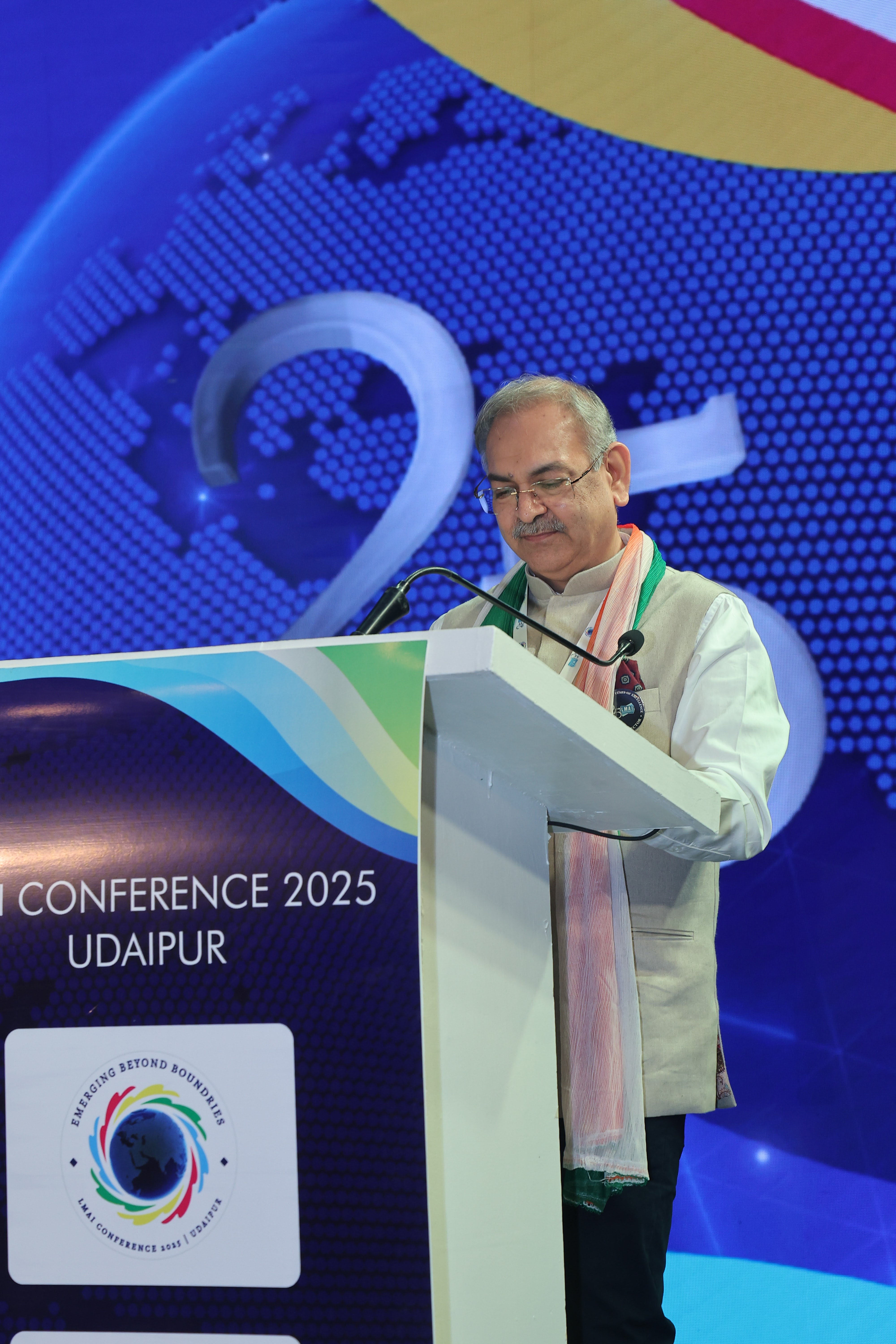
LMAI conference 2025, bigger and better, deliver’s awe!


Celebrating 25 years of inception along with their biennial Conference themed, "Emerging Beyond Boundaries", Label Manufacturers Association of India LMAI, delivered value! 


700 plus delegates were awestruck attending the seventh LMAI conference  at the picturesque and astounding venue, The Fairmont Palace Udaipur from 3rd to 6th July 2025. All 300 rooms at the property were booked at the venue Hotel and additionally 60 rooms were booked  in Hotel Aurika with a total of 360 rooms. 35 sponsors including some of the most renowned names in the world for the label manufacturing industry supported the event.  Kurz was the platinum sponsor and Avery Dennison the elite sponsor besides many others. Fairmont Udaipur Palace is an alluring destination to discover the charm of Udaipur, seamlessly blending timeless tradition with modern elegance, featuring a historic stepwell, one of Rajasthan's largest ballrooms and exclusive events pool with jacuzzi and amphitheater. Nestled in the Aravalli Hills, it offered easy access to the city's top attractions and cultural landmarks. In view of the author who has travelled the world over for diverse label events, 

This three nights-four days event, packed with amazing presentations and entertainment, was perhaps the biggest label event in the world”!

Traditional Rajasthani welcome awaited the delegates arriving by road rail and air. Local folk dancers, drums, music, garlands, traditional aarti and special beverages were a part of  the welcome on arrival while being ushered into the hotel. Excellent arrangements executed for their arrival and meticulous planning made it stress free checking-in for all guests. 


The conference was officially thrown open at 6PM on the 3rd of July 2025. The inaugural evening was themed patriotic, so the board of directors (BOD) were all wearing the Modi jackets and tricolor stoles around their necks.  

Rajesh Chadha President LMAI


The welcome note was delivered by the LMAI President Rajesh Chadha.


The conference agenda information was given by the two conference Chairmen Manish Desai and Jaideep Singh. 

Jaideep Singh
Manish Desai


Pradeep Saroha


Pradeep Saroha events director of Labelexpo India came onstage to apprise  the audience about the upcoming Labelexpo Europe. 


This was followed by Raveendran Selvarajan, Managing Director of Seljegat Printers Pvt.Ltd. being conferred the fourth LMAI lifetime contribution award. 

Author and Surendra Kapur Founder President


It was a pleasant surprise that after a lapse of few years the LMAI founder president Surendra Kapur came to attend the conference.  


Stephane Royere KURZ


After a presentation by Stephane Royere from platinum sponsors Kurz, all the event sponsors were felicitated. 


Thereafter the Welcome night themed “Saar’e Jahan Se achha”, was thrown open for cocktails, dinner and entertainment by Mohit Verma and troupe. The delegates, eager to party, hit the dance floor until late in the evening. When asked to wrap up so that they are back in time for the presentations next day, happy people were heard saying, “Abhi toh party shuru huyee hai!” Means, the party has just begun.

Jitesh Mehta


The second day commenced with another presentation by Stephane Royere, Head of business area packaging and print, international sales and marketing, of Kurz India and followed by one from Jitesh Mehta senior Director LPM Avery Dennison India. 


Natasha Jaichandra


The vibrant young girl Natasha Jaichandra director VEEPEE graphics enthralled the audience speaking on the ECG (expanded colour gamut).


Thomas Schweizer Heidelberg Gallus


After that followed an array of great presentations. Notable amongst them were from Appadurai country head of HP Indigo, Thomas Schweizer Global head of sales at Heidelberg Gallus.  


Ranesh Bajaj of Vinsak with Naoki Ogawa

Gourav Roy FIG with Florian Stroe of Mark Andy

Hostess Lekha and LaBella 


A huge attraction was LaBella!  She is an AI robot, she added glamour in leading delegates to wherever they wished to go!


Pawandeep Sahni, Managing Director of OMET India Private Limited made a high powered and energetic presentation pulling the audience into attention and becoming interactive. The presentation can be viewed on YouTube https://youtu.be/cVtHUPa-OGo?feature=shared Click the image on the left to watch the full presentation.


The preplanned motivational speaker’s slot had to be altered to the next day as Gaurav Arya, who was supposed to deliver the motivational speech, could not reach due to flight cancellations. The LMAI leadership must be commended for arranging yet another speaker in a short time. Anand Ranganathan, a renowned speaker, agreed to fly in on the next day that was final day and address the label fraternity. 


Once all the presentations were done for the day, it was time for networking, dinner and a musical evening that beckoned the guests to go on to the stage, dance and party.


The label industry continues to evolve, emerging beyond boundaries. The wet glue or glue applied labels have continued to transform initially to self-adhesive labels, converted on narrow web label presses and register a high growth rate to reach more than 50% of all the labels produced in India. Later the narrow web converting started to expand owing to evolution and labels, moved into diverse tangents. To dwell on the impact of this expansion and the modalities involved, the first program on the 3rd day was a panel discussion moderated by the author Harveer Sahni and titled, “Narrow web label converting expanding to diverse applications". The panelists were leading Indian printers in narrow web converting, Priyata Raghavan Deputy CEO of Sai Packaging, Mehzabin Nair Managing Director Skanem India, Ankit Gupta Jt. Managing Director Holostik Limited, Hemanth Paruchuri director Pragati Pack, Denver Annunciation Director Janus International and Stephane Royere of Kurz India. The impact and future of this expansion was discussed at length in the panel. 


The panel discussion was followed by a very interesting and confident presentation for Weigang by the young daughter of LMAI founder Amit Sheth.


Motivational Speaker Anand Ranganathan

More presentations followed until noon after which the motivational speaker Anand Ranganathan came 
onstage to deliver his speech. Following this a round table interaction was arranged for all sponsors to interact with printers. Each sponsor was given a table on which printers would visit in batches of six each to enable sponsors the opportunity to interact with their customers. 


The day culminated in a gala evening hosted by Kurz India. The dress code was “Men in Black” and for ladies it was “Glitter” to add shimmer to the vibrant evening started with an amazing 

laser show by special artists. 

The part titled "Gauardians of Empire"

Author with Stephane Royre 


After Jitender Pal Singh CEO of Kurz India addressed the gathering, LMAI past president Vivek Kapoor delivered a vote of thanks. 


Asees Kaur
It was then time for the celebrity performer Asees Kaur to add fun to the entertainment and prompt the delegates to hit the bar and the dance floor enjoying until late in the night or the wee hours of morning.


All good things come to an end, leaving nostalgic memories of fellowship, togetherness, networking, knowledge delivery and entertainment. It was time to go back home with perfect departures arranged so that there are no inconveniences.  This covering of the event would be incomplete without appreciating the amazing venue overlooking lush green hills all around, the weather was fantastic, the hotel staff was hospitable in the true sense of the word. 


The general Manager Vishrut Gupta was always around with his team responding to guests personally and as for the food, kudos to Amitesh Virdi the culinary director and his team who did a wonderful job delivering taste. 


The events organizing company led by the beautiful Hemal Bhagwat created precision in every aspect of the stay from arrival to departure. Delegates have been showering praise ever since.


The LMAI board of directors need to congratulate themselves for having created and delivered this mind-boggling big event, bigger and better than the best in the world. The icing on the cake is wonderful appreciations pouring in from delegates and sponsors. It is an encouragement to imagine and plan more for the next conference!

Written by Harveer Sahni, Chairman Weldon Celloplast Limited, New Delhi July 2025

More Images from the conference:

Amit and Rupa Sheth


Party time


LMAI BOD
Jaichandra, Nalani and Mehzabin

Sunday, April 21, 2019

Indian Label Industry: LMAI Conference 2019, KOCHI, Kerala


Grand Hyatt Kochi
India’s label association LMAI’s 5th biennial conference is planned to be the biggest and most successful event of Indian label industry. The event is scheduled to be held at recently opened property, HOTEL GRAND HYATT, KOCHI, BOLGATTI from 25th - 28th July, 2019. Perched on 26 acres of plush green land on the serene Bolgatty Island, Grand Hyatt Kochi Bolgatty is a waterfront urban resort overlooking the backwaters of Vembanad Lake.


Grand Hyatt Waterfront


Leading label printing companies and suppliers will meet to discuss, evaluate opportunities, learn and strike business partnerships that shape the future of their businesses in relaxing ambience and surroundings. LMAI conference has been growing in strength and numbers over the years.


2017 LMAI Conference at Agra


The last conference was held at Agra with 550 delegates. The LMAI leadership is expecting the attendance to jump up to 600 delegates. An elaborate knowledge sharing, entertainment and technical program is being put in place to deliver value to the LMAI members coming from all over India.


About the city Kochi: Kochi (formerly known as Cochin) is a city in southwest India's coastal Kerala state, fondly referred to as “God’s own country”. It has been a port since 1341, when a flood carved out its harbour and opened it to Arab, Chinese and European merchants. Sites reflecting those influences include Fort Kochi, a settlement with tiled colonial bungalows and diverse houses of worship. Cantilevered Chinese fishing nets, typical of Kochi, have been in use for centuries.


St.Francis Church Kochi

St. Francis Church was the original site of Portuguese explorer Vasco da Gama’s burial when he died in Kochi in 1524. Santa Cruz Basilica is known for its pastel interior, including an imitation by Fra Antonio Moscheni of Leonardo da Vinci's "The Last Supper." Paradesi Synagogue, founded in 1568, features imported Chinese blue-and-white ceramic floor tiles. The surrounding quarter, once home to a large Jewish community, is now filled with antique shops and old spice warehouses. Mattancherry Palace, built by the Portuguese in the 16th century and later renovated by the Dutch, showcases vivid Hindu murals.


Label Manufacturers Association of India, LMAI has a strong support of the label industry suppliers as sponsors which has been growing steadily, making their conference, the most important label event in India. 


The following leading industry suppliers from across the world have registered as sponsors and there are still a few more on the waiting list;

SR. NO
NAME OF SPONSORS
CATEGORY
1
AVERY DENNISON INDIA P LTD
PLATINUM
2
SMI COATED PRODUCTS PVT. LTD 
DIAMOND
3
PULISI INTERGRAPHIC
DIAMOND
4
GALLUS
GOLD
5
VINSAK INDIA PVT. LTD.    
GOLD
6
HEWLETT-PACKARD INDIA SALES PVT LTD.
GOLD
7
DOMINO PRINTECH INDIA LLP
GOLD
8
MACDERMID
GOLD
9
PERFORMANCE SPECIALTY PRODUCTS (INDIA) PRIVATE LIMITED
GOLD
10
J N ARORA & CO. PVT LTD
SILVER
11
NUMEX BLOCKS INDIA PVT.LTD.
SILVER
12
APEX ASIA PACIFIC PVT LTD
SILVER
13
FLINT GROUP INDIA PVT LTD
SILVER
14
MULTITEC AIDS PVT LTD
SILVER
15
LOPAREX INDIA PVT LTD.
SILVER
16
INTER FILMS INDIA PVT LTD ( DRAGON FOILS)
SILVER
17
FLEXO IMAGE GRAPHICS PVT. LTD.
SILVER
18
BALDWIN VISION SOLUTIONS PVT. LTD.
SILVER
19
INSIGHT PRINT COMMUNICATIONS PVT LTD
SILVER
20
GEW
SILVER
21
BOBST FIRENZE SRL
SILVER
22
ROTOMETRICS INDIA PVT LTD
SILVER
23
NILPETER INDIA PVT. LTD
SILVER
24
ZHEJIANG WEIGANG MACHINERY CO.,LTD.
SILVER
25
WELDON CELLOPLAST LTD ( LUSTER)
SILVER
26
WELDON CELLOPLAST LTD ( BROTECH)
SILVER
27
ROGLER
SILVER
28
WELDON CELLOPLAST LTD ( MARTIN AUTOMATIC)
BRONZE
29
COSMO FILMS LIMITED
BRONZE
30
LINTEC INDIA PVT LTD
BRONZE
31
ACME ROLLTECH PRIVATE LIMITED
BRONZE
32
HUBERGROUP INDIA PVT LTD
BRONZE
33
MONOTECH SYSTESM LTD
BRONZE
34
REPRO GRAPHICS PRIVATE LIMITED
BRONZE


The LMAI leadership will soon be closing the registration of sponsorship for this, three nights four days event.

Kuldip Goel


LMAI President Kuldip Goel says, “Unlike exhibitions, the LMAI conference intends to bring together the Indian label fraternity at one venue for four consecutive days. The suppliers get a chance to spend full time with their prospective customers in a relaxing atmosphere” he further adds, “Since many delegates come with family, it brings about a unique bonding within the industry, creating the feel of belonging to a large entity, the Indian Label Family!”.  


Marriott Kochi


The conference registration process has started from 1st April 2019. In the first phase registration has been opened for LMAI ordinary or printer members so as to give them the first option for accommodation in the main event venue i.e. Hotel GRAND HYATT, KOCHI, BOLGATTI. Registration will be on first come first basis. Registration for Associate or supplier members will begin a little later. Once the main hotel venue is full, additional delegates will be accommodated in another property i.e. MARRIOTT, KOCHI a short distance from the main event venue. Adequate arrangements are being made to transport delegates to and fro, between the two hotels.


Manish Desai
LMAI Conference Chairman Manish Desai says, “We have already held the previous conferences at Goa in western India, Jaipur and Agra in North India and this time we moved it to South delivering value to our members. LMAI being a pan national association is committed to bringing value and fellowship amongst the Indian label community spread across the length and breadth of India”.  He also mentioned that the south India based members who found it inconvenient travelling long distances to north will also be able to attend conveniently and bond with their peers around the country.

Only members in good standing who have paid their membership fees are allowed to register. Non-members can only register by first becoming members of LMAI. This conference is slated to be better and bigger than ever before.

It is time yet again for the vibrant colourful world of labels to congregate in Kochi to experience the friendship and fellowship with global suppliers and competitors.

Contact for conference registration;
Event Organizers - Mercury Integrated
Contact Person - Felicia Lobo
Mob No - 9152326871/ 022-26115502
Emai Id - lmaiconferencekochi2019@gmail.com

Contact for membership registration:
Manish M. Panchal
(Admin Secretary)
Label Manufacturers Association of India
A-418, Mayuresh Trade Center,
Plot no: 04, sector-19, Vashi Turbhe Road,
Vashi, Navi mumbai: 400 703
Ph No : 8097333995
Web: www.lmai.in 

 Written by Harveer Sahni Chairman Weldon Celloplast Limited New Delhi India April 2019