Harveer Sahni

Harveer Sahni
Author Harveer Sahni

Avery Dennison

Avery Dennison
Sustainability at Avery Dennison
Showing posts sorted by relevance for query History part 2b. Sort by date Show all posts

Monday, September 16, 2019

History of Indian Label Industry part 2D


This is the final part of History of Indian Label Industry” up to third quarter of 2019 written by the author. The history would look incomplete if mention was not made of those who started their label journey from scratch or very humble beginning and then rose to a pinnacle achieving success not only in the home market but also internationally and continue with their journey to greater heights.

Ole Rugland MD-Skanem who acquired Interlabels with
Gautam and Bhavin Kothari promoters of Interlabels
From the start of new Millennium in 2000 until the time of writing this part of the history, enormous changes have come about in the Indian label industry. Label printing companies who started from virtually nothing, grew and spread to multiple locations. Some of the bigger ones on the way, decided to sell out to or partnered with foreign companies who were entering the Indian market for label manufacturing. Label, being a miniscule portion of the total packaging cost of a product, does not deliver very large turnover as compared to that of package printing or flexible packaging companies. However, it does generate relatively higher profit margins than that of high turnover package printing industry. For this reason, we did not see any label companies in the earlier part of the new Millennium who could reach a coveted target of Rupees 100 Crore or a Billion Rupees as annual sales turnover. However, some packaging companies or multinationals who invested in labels as well, were above this figure. It was incredible that at least three Indian startup companies who started their business purely with stickers that later evolved as labels, grew to cross Rupees 100 Crores turnover or more in 2018-2019.

Manish Desai-Mudrika Labels
First among them is Manish Desai led Mudrika Labels. Sandeep Desai working at a greeting cards company started trading in stickers that he outsourced in 1975 and a year later he started screen printing them at home. His 10-year-old cousin, Manish was always excited to see stickers being made. In 1977 Sandeep moved his sticker manufacturing to a 500 square feet factory in Malad. In 1985 they started outsourcing pregummed sheets and get them printed on offset to finally finish them to be stickers at their factory. They grew and expanded into packaging, making cartons and corrugated boxes. Sandeep eventually moved into packaging and the young Manish who had labels in his heart, in 1996 expanded into labels with Kopack label presses and later many Gallus presses. He further expanded integrating backwards to produce self-adhesive labelstocks and collaborated with a Korean company to produce heat transfer labels. By 2019 Mudrika labels were working out of 100,000 square foot shop floor, 550 workforce to achieve a Rupees 160 Crore (1.60 Billion Rupees) annual sales turnover.

Kuldip and Naveen Goel of Any Graphics
With their awards


The second person to achieve this Kuldip Goel of Any Graphics started from very humble beginnings. At a tender age of 14 years he started making stickers by screen printing manually himself to earn some money while still in school. He did this in his one room home. Despite extreme hardships in life he remained honest and focussed on providing the best in quality and indulging in innovation. In 1989 he started his maiden venture Stickline in Noida. By start of the millennium Kuldip’s company Any Graphics was recognised as one of the best label manufacturers in quality and one that never cut prices to get orders but prove their innovative capabilities to convince customers. From mere screen printing he went on to add dome labels and letterpress printed labels in his portfolio. In 2009 he moved to a 100,000 square feet clean sanitized dust free factory adding, Heidelberg Offset Presses, Orthotecs and a fully loaded Omet flexo and screen combination label press. He also became one of the largest makers of rigid boxes. By 2019 he had crossed the Rupees 100Crore sale without compromising profit margins and becoming one of the most awarded companies in India. In 2019 he commenced construction of a certified green factory spread over 15000 square meter plot size and 250,000 square feet shop floor.


T
Sanjeev Sondhi of Zircon with Pawandeep Sahni-Omet with
OMET Varyflex press 
he third printer who grew in similar pattern, a stout follower of Lord Shiva who greets people with, “Jai Bhole Ki”
(Victory to Lord Shiva, lovingly referred to as Bhole) Sanjeev Sondhi, started his career as a medical Representative and carried on in the profession switching jobs until 2005 when he decided to trade in Barcode labels, printers and accessories. He was looking for bigger things in life! Two years later in 2006 he launched his maiden start-up venture Zircon Technologies India Limited with a Mark Andy 2200 Label press in Dehradun. Being a salesperson himself he drove the company in fast mode expansion and in a few years added multiple Mark Andy and Omet label presses which include the high-end combination Omet Vary flex 430mm. In just 15 years of inception Zircon crossed the Rupees 100 Crore reaching 120 Crores annual turnover mark coming purely from label manufacturing, “a record in itself”! While other successful label companies at this stage would look for foreign suitors, Zircon in 2019 was the first totally indigenous label manufacturing company planning to go public to raise capital for future expansion. They got the approval from SEBI in November 2018 with plans to open a 90-100 Crores public issue. Waiting for an appropriate time to launch their public issue Zircon continued to grow and invest in expansion. Sanjeev hoped to invest 80 percent of the receipts in expanding labels business while the rest in other allied products. Sanjeev was even looking at inorganic growth by indulging in Mergers and Acquisitions. With 3 factories in Dehradun and one in Chennai Sanjeev Sondhi aims to grow multi-fold with blessing of Bhole (Lord Shiva).

Having achieved such success through sheer commitment and hard work it is natural for companies like the three mentioned above to look at other avenues in synergy with their business to achieve a faster growth. All the above, while they continued to be proud of their beginnings and aware of the evolution, started to study or invest in new technologies.  We had reached a time when multiple labelling technologies surfaced, and future had many surprises in store. From the primitive times when a label had to be either tied to a product or riveted on to it or affixed with a wheat flour paste, we believed to have reached a pinnacle when self-adhesive or pressure sensitive adhesive labels that were developed and grew to establish as a predominant labelling technology. Initially it was the manually applied wet glue adhesive paper labels that were in use. With development of starch and dextrin-based glues and availability of automatic wet glue labelling equipment, wet glue labels became the most widely used method of labelling. Most of the organised industry employed packaging lines incorporating wet glue labelling. It was used in all segments like pharmaceuticals, Liquor, cosmetics, oils and in fact most of the products that were packed in glass bottles or metal cans. When plastics, mostly HDPE (High Density Polyethylene), started to evolve as a preferred packaging material for glass bottles and cans due to ease of manufacturing, reduction of freight due to lighter weight per can, possibility to produce in different shapes and colours, labelling with starch or dextrin based adhesive became a challenge. This change was taking place during the 1970s and 1980s. Since HDPE is a low energy material, paper labels with water-based adhesives made from various gums, starches and dextrins would not anchor on to the containers or would fall off in transit. Labels with pressure sensitive adhesives or stickers had already started being made initially by screen printing methods and later by offset printing, these labels would stick well just by application of pressure. They did not have to wait for drying and could be packed instantly after labelling while the wet glue labels would have adhesives oozing out on the sides and attracting dust and shifting in packing process, adversely affecting the aesthetics. More and more companies were opting for these stickers.
Heat Transfer Labels for pens
Towards the end of last century self-adhesive labels evolved in roll form and the automatic labelling equipment for pressure sensitive adhesive labels became available. Many companies did resist shifting from wet glue to self-adhesive due to the high cost of label applicator replacements. This is a big challenge that the likes of printers mentioned above faced and yet with their firm resolve they became a part of the change that brought them success. As the retail became dependent on customer choices and there was need for better decorated labels, self-adhesive labels became the preferred labelling technology and grew at fast pace. In between screen printing on containers also started but a slow process that did not have much decoration as compared to printed labels, it did not grow as a preferred process. Self-adhesive grew so much that it became almost 50% of all the labels produced in India. As we entered the new millennium and started looking also into future the thought process for future of labels is becoming extremely diverse and evolving in different tangents. Shrink sleeves came in to take away a big market share given the possibility of 360 degrees visibility. Wrap around labels also became extensively used in the beverage segment. Heat transfer label technology that had originated as Therimage Label technology developed by Dennison Manufacturing company in USA in the 1990s did not flourish then because Avery, who acquired Dennison, did not promote it as it was not in sync with their core business of self-adhesive labels. Once the patents expired, the Heat Transfer Labels or HTL reappeared in the second decade of new millennium and started growing. In mould labels is another labelling technology that had found usage in many segments and started registering growth in large volume usage. At this time, I try and link the changes to the three above who understood the need to expand the scope of labels in their business portfolio. While Mudrika as I mentioned invested in heat transfer labels, Any Graphics into innovative labels and rigid boxes and Zircon also started moving into brand security and innovative packaging including spiral wound containers.
Matrix waste in addition to liner waste
Around this time environmental concerns also impacted the self-adhesive label industry as almost 50% of the converted product is waste going to landfills. Much work was being done on this to reduce the liner tonnage by opting for thinner filmic liners that can be recycled and by developing linerless labels. Digital printing on to the products is another technology that may replace some of the usage of self-adhesive labels. All said and done, the sheer market size in India and the inertia, brings business to all label technologies and for this reason the self-adhesive labels market continued to grow at double digit rates. The industry will keep evolving both in terms of quality and innovation as also taking environmental concerns in its stride.

In over a year, as another decade ends, the author will update the history on the outcome of such endeavours. The total History as chronicled by the author until now is now available on this blog on links as below:

Part 2 D: Above

Written by Harveer Sahni Chairman Weldon Celloplast Limited New Delhi July/September 2019

Note: No one is authorised to reproduce, copy or reprint this article until permitted by the author in writing. 

Sunday, August 11, 2019

History of Indian Label Industry Part 2B


In 2006, I wrote the “History of Indian Label Industry” I have now written the 2nd part. This a brief report, I plan to write a book on the subject with a lot more expanded information in the near future. In a large country with industry spread over such a vast area and a huge population, it is difficult to chronicle all in few words. Being a long article, the part 2 of History of the Indian Label Industry is being posted on this blog in a series of four articles. The below is part 2B of the series the earlier ones can be accessed in this blog by clicking the links below;
“History of the Indian Label Industry” part-1:  lnkd.in/eDpGUPM 

While the printed decorated and converted product label industry was evolving, in parallel, without making much noise another segment of the self-adhesive labels was growing steadily. These were the variable information labels, plain labels and intelligent labels. This segment was initially the mainstay of smaller label printers with lower capital investments in printing equipment. As demand grew, this segment started galloping by leaps and bounds to eventually surpass the prime label or product label segment in the number of square meters of labelstock used, though turnover wise it remained much lower due to low value addition. In the self-adhesive label industry, it became “the bigger segment”.

Initiation of variable information labels in India happened in early 1980s due to indulgence by P C
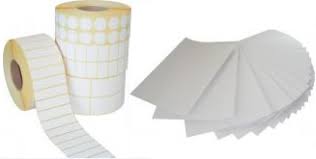
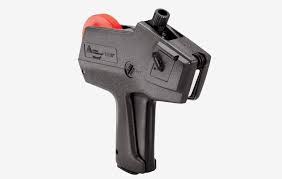
Jain of Great Eastern Impex. He brought to India price marking labellers and labels from Pitney Bowes USA and later started producing labels himself. Gun labels, as they subsequently came to be called because of the labellers which dispensed these labels look somewhat like guns, started to grow at a rapid pace. They were primarily used to dispense and affix price labels at point of purchase in retail stores and later also used for markings in garment manufacturing. Employees, associates and distributors of Great Eastern saw the market of these labels growing due to the nascent stage, the higher margins provided them enough temptation to breakaway and start their own label producing ventures. More so because the initial investment in equipment was not too high. Vinayak Sud of Liddles had also invested in this segment. With consumer protection laws becoming rigid, price marking labels were banned because prices were required to be printed on the packages or on the product labels affixed on them, this led to a slowdown in demand in this segment. By the onset of new millennium barcode usage had firmly commenced and in 2005 with establishment of GS1 standards, the market for plain labels transformed yet again to grow with introduction of barcodes. When inkjet and laser desktop printers started becoming affordable, important and necessary part of every home, office and factory, demand arose for self-adhesive labels in A4 format as well. These found usage in mailing, logistics and package identification. The variable label and plain label segment became identifiable and growing at a pace quicker than the overall industry rate.   With the advent of CDs becoming popular another segment of plain labels for CDs came around. People could create their own CDs, print labels created on home computers-printers and affix on the CDs. New Delhi based Rational Business Corporation and Mumbai headquartered Technova became major players in this segment. Without much change in their existing equipment their product offerings increased, and they could offer a range that included gun labels, barcode labels and plain labels. From just Great Eastern and Liddles at one time, others who initially involved themselves into this segment were Better labels in Chennai, Interlabels, Super Labels and Tayabi Tags in Mumbai. These were followed by Prakash labels Noida, Shipra Ghaziabad, Rachna Overseas Gurgaon, Dynamic Marking Delhi and a host of traders who not only setup label converting machines but also started to produce labelstocks themselves. After this the market grew phenomenally and hundreds of converters across the country jumped into this industry. This growth brought with it end user demands for innovative and technically advanced labels. Increased government regulations also brought in demand for statutory information with track and trace capabilities. The volumes these converters were converting became huge, with the likes of Prakash Labels alone converting close to a million square meters each month. Margins receded due to intense competition. To remain profitable most of these label producers also traded in accessories like Barcode printers, scanners, ribbons, ink rolls etc. needed for variable information label printing and dispensing at point of purchase. With modern day retail growing, demand for these labels escalated at close to 30% per annum.


Label industry segmentation changed, became more defined and closer to international estimates of
market shares. The total market of self-adhesive labels (printed and plain in roll and sheet) in India between 2005 to 2019 seemed to reach close to or more than a billion square meter mark. The share of different segments in the overall Indian Label industry in the author’s opinion and estimation is as below:
Variable Information Labels
Inkjet/Laser label                                        20%
Barcode TTR labels                                    17%
Direct Thermal product Labels                   10%
Dot Matrix or contact printed labels             5%
Prime Labels                                                40%
Others                                                            8%

Most of the plain labels were being converted on Indian made narrow web label presses. Notable amongst these press manufacturers are Multitec, Jandu, Webtech, RK, etc. The variable label segment undoubtedly brought growth even to these press suppliers who improved their equipment to be able to produce printed product labels of acceptable quality. This label segment that at one time was the lower end became voluminous. In terms of volume of labelstock usage, it became the “bigger segment”.

Around 2008 the Annunciation family owned Janus International had made a pioneering move into the world of digitally printed labels in India by investing in an HP Indigo label press. Though the initial days with this technology were extremely challenging due to high costs of equipment and consumables, yet it was agreed that the digital printing technology will persist and grow. Europe and USA were already witnessing the move from conventional to digital. Labelexpo 2009 was a perfect indicator towards a digital future for labels. 

Amar Chhajed of Webtech Labels set the example by investing in a Xeikon digital label press even though it appeared to be an investment made ahead of its time. By 2015 I had interviewed a lot of printers and came to conclusion, that digital will still have to wait some more, yet Amar Chhajed predicted that in another 2 or 3 years, digital printing in labels will start growing. His prediction was correct as in 2018 I wrote “The journey in digital has begun”. 22 high-end digital label presses had been installed in India and number started growing. A year on, the interest in digital printing of labels is gradually becoming an indulgence that is attracting increased investment at all levels.

During this period Indian label printers grew in size and numbers, they started spreading into interiors of India. An industry that originated in Mumbai and spread in the Metro cities in the 1990s and it was in the first decade of a new millennium that a lot started happening and industry started growing with installations of new presses in larger Tier 1 cities like Mumbai, New Delhi, Chennai, Hyderabad, Ahmedabad and Bangalore. Kolkata a slow entrant also reported installations of Orthotecs. Later Debashish Sarkar of Classic Image Offset Kolkata lead the growth of labels in the eastern sector by installing Gallus label presses. Others who set up label manufacturing in the Eastern and north Eastern sector include Huhtamaki, Sai Com Codes, Holoflex, NAP printers, Insight Graphics, etc. Closer towards the second half of the 2000-2010 the label printers surfaced in the Tier 2 cities and the smaller Tier 3 cities, the trend carried on and labels were being produced in cities like Nagpur, Pune, Indore, Bhopal, Nasik, Rajkot, Surat, Baroda, Tirupur, Sivakasi, Madurai, Salem, Coimbatore, Manipal, Guwahati, Sikkim, Muzaffarnagar, Kanpur, Delhi NCR, Chandigarh, Baddi, Nalagarh, Paonta Sahib, Ludhiana, Jalandhar, Jammu, Pathankot, etc. By end of the decade label printers were present across the length and breadth of India. At this time international press installations also started picking up in numbers. Indian agents of international press manufacturers saw the opportunity and shifted gears to sell aggressively and increase the international label press population. The most active seen were Sameer Patkar of Gallus, Gourav Roy of FIG for Mark Andy, Amit Sheth of Label Planet for Orthotec and Weigang, Pawandeep Sahni of Weldon for OMET, Manish Mehta of Reifenhauser for Bobst, Amitabh Luthra for Edale, Ranesh Bajaj of Vinsak for Lombardy, Vijay Pareek of Genius for MPS, Manish Kapoor led sales team of Nilpeter India and many others.
Leading Printers at Panel discussion in LMAI conference 2015
Hemanth-Pragati, Sanjeev-Zircon,Rajesh Chadha-Update, Harveer Sahni,
Arvind-Sai Security, Manjunath-Global pkg, Denver-Janus,
Chandan Khanna-Ajanta Pkg,  and Amar Chhajed-Webtech
Though it is difficult to list all, yet some of the printers across the nation who invested in multiple high-end European and American Label presses mentioned above included Ajanta Packaging Baddi and Daman, J K Fine prints Mumbai, Zircon Dehradun, Update Prints Delhi, Jain Transfer NOIDA, Holostik NOIDA, Pragati Pack Hyderabad, Mudrika Mumbai, Total Print Mumbai, Uflex NOIDA, Webtech Mumbai, Narain Offset Nagpur, Wintek Bangalore, Manipal Technologies Manipal, Syndicate Labels Delhi, Printmann Mumbai, Interlabels Mumbai, SelJegat Sivakasi, Sai Packaging Faridabad and Bangalore, Sai Comcodes Delhi, Renault Paper Products Palghar, Letra Graphix Ahmedabad, Kumar Labels Noida, Any Graphics Noida, Global Printing Packaging Bangalore, Uflex Noida, Barcom Mumbai and a lot of more printers who are single press owners. This period also saw established offset, package printing and flexible packaging printers also move into labels and some like Pragati Pack acquired wider presses like Omet Varyflex to also have capabilities for producing folding cartons on these flexo combination web presses. Others from the Offset printing segment who invested in narrow web label printing include Narain Offset in Nagpur, Printmann in Mumbai, Manohar Packaging Goa, Rajhans Bangalore Global Printing Packaging Bangalore, Arunodhaya in Hyderabad, Manipal Technologies Manipal, Noble printing Mumbai, Unipack New Delhi, Printrays in Jalandhar, Packtime Pune, Sonic Labels Mumbai and so many others.

3 Genarations: Late Hanumantha Paruchuri, his wife with sons
Narendra and Mahendra Paruchuri and Grandsons Harsha and Hemanth
“There is a fountain of youth; it is your mind, the talents, the creativity you bring to your life and the lives of people you love. When you learn to tap this source, you will truly have defeated age” These words came from the famous Italian actress Sophia Loren. So very true! As parents, when people witness their offsprings unfold the talents and creativity they have acquired as they grew up, there is a sense of fulfilment and satisfaction. Every parent strives hard in the given means to provide the best education and professional training to their children, so that they can stand up to the challenges of modern-day competitive living. In our Indian business society, the fathers or for that matter even mothers are natural mentors who guide the youth to eventually grow up to inherit the businesses that they painstakingly set up. It is a pleasure to see the children join you as trainees, gradually transform into managers, become business owners and eventually business leaders. Our label industry which originated in the seventies of the twentieth century, was witnessing a handing over of the baton to the next generation during the first two decades of new millennium. The way this generation moved out of the shadows of their mentors to evolve into professional managers who modernize, expand, systemize and lead the companies successfully to new arenas, is commendable.
Leading the group of generation next and taking over from his father Satish Pai was Gautham Pai, Managing Director of Manipal Press Limited later renamed Manipal Technologies Limited. Manipal Press was started with a single letterpress machine in 1941 and by 2010 had spread to over 600000 square feet with over 2000 employees and state of art machines. While Manipal Press was a predominantly a security and offset printing company yet Gautham lead the company’s foray into self-adhesive labels. They took into their fold Chennai based UPSL, set up label production also in Manipal and in Nigeria. In Sivakasi, Raveendran and his brothers at Seljegat started handing over the decision making to their sons Prashant, Mukundan and Sivanesh.  Gururaj Ballarwad of Wintek at Bangalore toiled hard to achieve a position of leadership for his company. Before Wintek being acquired by ITW he had somewhat handed over decision making to his sons Gopi and Girish both of whom later set up their venture Itekpak also in Bangalore. Vijay Raghavan of Sai Security Printers entrusted his business to elder son in law Arvind in the South and to his younger daughter Priyata in the North. Pramodh at Global Printing and Mahaveer at Mahaveer labels were other youthful leaders at Bangalore, designated to lead the label businesses of their companies. At Hyderabad, Pragati Offset has been a highly successful and celebrated offset printer who has invested extensively into self-adhesive labels. The charismatic Narendra Paruchuri has transformed the label business to levels comparable to the best in the industry. The shots are now called by his sons Hemanth and Harsha.
Surendra Kapur and son Himanshu Kapur


In Mumbai The Kapoors of Jaikaushal Industries and R K Papers fame Surendra Kapur and Jatinder Kapur had mentored their generation next comprising of Himanshu, Karan and Rahul to promote and take their new venture J K Fine prints to success.  The Khannas of Ajanta Printarts had let their scion Chandan Khanna to lead their journey into labels as Ajanta Packaging. Jagdish Zaveri of Total Print left it all to his soft-spoken son Sandeep Zaveri. 


Joe annunciation with sons Denver and Janus
Joe Annunciation at Janus International after three Gallus presses and an HP Indigo press almost retired as his sons Denver and Janus started delivering success.  The young brother and sister team of Santosh and Sandhya Shetty surprised all in the industry when they bought the brand new Nilpeter to announce their entry into self-adhesive labels in 2008. Rohit Mehta son of Ajay Mehta of SMI Coated papers mentioned earlier herein, was leading the company to global standards. In Aurangabad the feisty Ramesh Deshpande found time for social and industry issues because his son Hrishikesh was holding fort. In Ahmedabad it was Meet Pandya son of Bakul Pandya of NP Label, Nirav Shah nephew of Kamlesh Shah at Letragrafix.  Heading North, the author would not like to miss out on the own handing over the charge to sons Pawandeep and Kanwardeep. Pawan has been instrumental in changing the company from being a mere labelstocks producer to a total solution provider for the label printers. Jain Transfer and Monarch Graphics at Noida experienced the change with Rishabh, Parshav and Bhrigav; sons of brothers Sudhir Jain and Pavail taking charge of their respective businesses after separating amicably. Anuj Bhargav of Kumar Printers has gone it alone and maintained the trust of his mentors from day one. Kuldip Goel of Any Graphics has always had a passion to attain the ultimate in quality in labels, they moved into a brand new 100,000 square foot factory in 2009. He proudly says that most of the decisions have originated from ideas given by his son Naveen, including the further expansion to start building an even larger factory over a 15000 square Metres plot in 2019. Others who passed the baton to their next generation include P C Jain of Great Eastern to Shakti Jain, Prem Khanna of Rachna Overseas to Karan Khanna (a young son and entrepreneur who unfortunately passed away untimely), Ashok Nerkar of Unique Photo Offset to sons Gautam and Humbeer and many more such cases. The list of these youngsters is exhaustive. These young managers were like an aromatic fresh breeze blowing over the Indian Label Industry!

To be continued...

Previous parts of the article can be accessed at;


Written by Harveer Sahni Chairman Weldon Celloplast Limited New Delhi July 2019

Note: No one is authorised to reproduce, copy or reprint this article until permitted by the author in writing. 
Friday, August 23, 2019

History of Indian Label Industry Part 2C

Late Karan Khanna

The younger generation grew up to take charge while the founder promoters were ageing and stepping back to take up advisory roles. At this time, it will be appropriate to mention the important legendary persons who contributed to the establishment and growth of label industry and passed away in this period. Surinder Singh Arora of Amritsar Printing press had worked his way into the centre stage of an evolving label industry in India. He excelled not only in producing labels but also representing international companies like the Cham Paper group, Focus label machinery, etc. He expired on 20th April 2006. Another legend Kartar Singh Dunglay the founder and owner of Good Work Company New Delhi breathed his last in the intervening night of 7th and 8th of April 2013. He was 78 years of age. His was the first label company to partner with a European company to form a joint venture titled “Reydun” with Belgium based Reynders led by Mark Reynders. It is ironic that a year later, on the on 5th of April 2014 at the age of 75 years, another legend in the label industry Jagdish Zaveri breathed his last in Mumbai leaving the reigns of his business to his son Sandeep Zaveri. Amongst others who passed away during this period include Ramesh Doshi of Shanti Lal Doshi Pvt. Ltd., a company that pioneered the production of release papers and self-adhesive labelstocks in India and Karan Khanna young son of Prem Khanna of Rachna Overseas, in the prime of his youth, at a time when he was showing his calibre in taking over and growing the company established by his father. Karan passed away after a brief illness.

Priyata Raghavan
Indian label industry did not have many active businesswomen as managers. That started to change as the new millennium progressed, Indian women started acquiring technical and management skills to lead high levels of investments in the label industry which was registering high growth rate. It is an imperative to recognize the contribution of these women. Honey Vazirani was one of the earliest female managers in the Indian label industry. From being a management trainee in 1989, she rose to be the head of the labelling division of Thane based Paper Products Limited then referred to as PPL. This company was eventually acquired by Global flexible packaging major Huhtamaki and was renamed Huhtamaki-PPL. After spending over 25 years in the company Honey took a break and later started her own maiden venture Leap Digiprints with an HP Indigo digital label press to make digitally printed labels. Kusum Dunglay, wife of Kartar Singh Dunglay, an MBA from London University worked actively at the Dunglays’ venture Good Work Co. and led their foray into label manufacturing. After the death of her husband she carried the mantle of leadership with support of her son Rouble Dunglay. Amila Singhvi is another lady who grew her company International Print-O-Pack (IPP) from being a pre-press house to being leading offset printers and packaging manufacturers. She entered label manufacturing but with her package printing business growing multifold, she quit the narrow web label business to further grow IPP into one of the largest print packaging producers. Bharat Mehta of Super Labels Mumbai was one of the first few self-adhesive label printers in India. Super Labels attained growth with a silent support from Bharat Mehta’s wife Meena Mehta, a B. Sc chemistry. For over 20 years she was driving the organization through motivation, enthusiasm and participating in all decision making, even after their sons Dhaval and Darshan joined them. The company eventually became a joint venture with the world’s largest Label company CCL. Unfortunately, the relationship between the partners soured and the JV collapsed. Sandhya Shetty a graduate in Chemistry and Masters, in management Studies (Marketing), worked for 8 years in the field of business research and analysis. She worked on projects involving Government contracts, Defence sector in the US and in the hospitality sector in India. In 2008 at Labelexpo India she bought a Nilpeter to initiate her foray into labels as Synergy Packaging Pvt. Ltd. Shweta Sheth, an alumnus of Amherst, Massachusetts USA, was actively involved in the working of Primark labels, a part of the General Metallisers Group, as a director. Renuka Raj, an MBA from IIFT Delhi setup the first flexographic narrow web label printing company in the state of Andhra Pradesh. Completing her post-graduation course from IIM Lucknow, Priyata Raghavan joined the FMCG division of ITC Limited, before moving over to Sai Security Printers, a company owned by her father, Vijay Raghavan. Priyata has led the company’s label printing operations to profitability and an emphatic presence in the high-quality label segment. Other women who helped their spouses or families in business include Meenakshi Mittal wife of Trilok Mittal of Wonderpac and Neha Jain wife of Shakti Jain of Great Eastern IDtech.

Usage and growth of labels is directly linked to retail selling. Retailing in India is big part of Indian economy and accounts for about 10 percent of its GDP. Organised retail enhances the rates of growth in retail due to marketing efforts of brand owners to motivate consumers who reach out impulsively to lift products off the store shelfs at the spur of the moment. Time had come for rapid growth in organised retail, Government of India saw the potential and foresaw the fillip it would get by attracting foreign Direct investment or FDI, which was a major monetary source for economic development in India. Indian retailing industry, up to 2003 was limited to the local owner driven colony shops referred to as kirana stores. As the decade of 2000 progressed, larger format organised self-service stores started to surface in many areas of urban India and continued being set up until 2010. This was time for FDI, as investors around the world were eyeing this massive middle-class market to make substantial investments and acquire a sizeable share of it, but government disallowed FDI in multi-brand retail, forbidding foreign ownership in supermarkets, convenience stores or any retail outlets. Even single-brand retail was limited to 51% ownership. In November 2011 announcing reforms, FDI was allowed in retail however due intense political pressure it was put on hold a month later. In a series of moves in 2012, FDI was allowed in retail and global retailers became active in India. This is the time that started to witness an increase in label press installations across India and in all segments and categories of labels. As mentioned earlier organised retail spells enhanced need of labels bringing rapid growth to the labels industry.

International interest in the Indian label market started becoming an indulgence. In 2005 Belgium based Reynders set up a joint venture Reydunn at Manesar Gurgaon with Dunglays of Good Work Co. New Delhi. The partnership did not work out and in 2007-2008 they parted ways, but Reynders stayed on and started their wholly owned subsidiary at Chopanki near Bhiwadi in Rajasthan. Brady Corporation founded in 1914 in Wisconsin, USA, established their manufacturing unit in Bangalore in March 2006. In December 2007 Printcare PLC Srilanka established their wholly owned subsidiary in Coimbatore Tamilnadu titled Printcare India Private Limited specializing in designing and printing Teabag Tags, Teabag Envelopes and labels. Printcare India began its operations in June 2008. Around the same time Mikael Dahl of JV Nordvalls Sweden entered into a joint venture with Venu Ayyar of Laxmi Compugraphics. This venture also did not take off and was called off later in 2012. These happenings did not deter the international interest in investing in the large Indian market. In early February 2012 the industry was surprised to hear that Gururaj Ballarwad led Wintek Flexoprints based in Bangalore India, had been acquired by Hyderabad based ITW Signode, ITW India Ltd., a subsidiary of the multi-billion Dollar fortune 200 global industrial products company ITW is head quartered in Illinois, USA.

Just about two weeks later yet another European multinational label and packaging company Skanem invested in India's biggest label printers Interlabels, Mumbai. Headed by the brothers Bhavin and Gautam Kothari, Interlabels had been in the forefront of label industry. Bhavin Kothari has been one of the founders of LMAI (Label Manufacturers Association of India) and later the President of this association. In September 2012 Mumbai based Positive Packaging Industries Ltd. the flagship company of Enpee Group, an international conglomerate with over 50 years of business experience, acquired Bangalore based SGRE Labels Private Limited. Positive Packaging has been a pioneer in flexible packaging with state-of-the-art facilities located strategically in India, Nigeria and the U.A.E. Just another few weeks down, the news came that Mumbai based Webtech labels lead by Amar Chhajed and cousin Jitesh Chhajed is another leading label company that has been acquired by an internationally renowned company, Huhtamaki Oyj's subsidiary in India Huhtamaki-PPL. This is in line with the trend, that international label and packaging producing companies continue to consider India as their most important destination for market expansion. Amar Chhajed continued with Huhtamaki-PPL looking after the Webtech business and later designated as President of Huhtamaki’s Labelling business. Another 2 years on in 2014 Huhtamaki bought over Positive packaging which was largely a flexible business takeover but with it came the SGRE label business. Moving on in 2018 Huhtamaki acquired Chandan Khanna led Ajanta packaging firmly establishing itself as the largest label company in the country.  400 Crores out of their 2300 Crore turnover came from labels. Out the 400 Crores labels turnover 200 crores came from self-adhesive or PSA segment making them the undisputed leaders in the segment.

In February 2017, the world’s largest label printing company CCL announced their entry into India. CCL lead by Geoffrey T Martin and headquartered in Toronto Canada had 2015 revenues reported at 3 Billion USD and a total workforce in excess of 19000 employees, operating out of 150 state of art manufacturing facilities spread over North America, Latin America, Europe, Asia, Australia and Africa. CCL, through their Dubai based joint venture with Albwardy Group; Pacman-CCL, signed a binding agreement to acquire a majority stake in Mumbai based Super Labels. Unfortunately, this JV due to differences between partners and could not take off as envisaged.

Environmental concerns and sustainability have been matters of discussion at various industry forums, over the years they have become even more important. Almost forty years ago, when I was just a commercial siliconiser, people at large did not understand what release paper or silicon paper was. I would jokingly explain it was a product, a protective paper behind a sticker, that would eventually go into wastepaper basket. In real terms the release liner, would be disposed-off in landfills or burnt adding smoke and gasses to the environment impacting it adversely. Time has changed, concern for environment is a necessity and cannot be taken lightly as a joke. We are responsible for leaving behind a legacy of a cleaner and liveable environment for generations that follow us. We need to make our manufacturing programs, sustainable. Sustainability means giving back to mother earth what we take from it or reduce, drawing the resources that we cannot replenish forthwith and cut down generation of industrial waste. Unfortunately, 50% of all that self-adhesive label industry produces goes as waste in terms of waste matrix and release liners. While globally many endeavours are being adopted to reduce liner waste yet in India a lot needs to be done. Switching over to liner less labels where-ever possible, helps but not much work is done in this direction. Using thinner filmic liners does result in reduced tonnage of liners and their recyclability. During this period many a top-end printer had started using clear on clear filmic label materials aiding sustainability to some extent. Global leaders in Labelstocks Avery Dennison initiated a program to collect and recycle silicone release liners in India, a step in the right direction. But given the size of the country and geographical spread of label units, it is a gigantic task. Other than this some printers have adopted waste management by shredding waste and compacting it for use as fuel in boilers and other applications, this is only a miniscule portion of the Industry. Largely, the waste is still sent to landfills or is incinerated. In times to come legislation will come to make sustainability and environment safety an imperative.
...to be continued to Part 2D


For complete previous history follow links below:


  1. History of Indian Label Industry Part 1: https://harveersahni.blogspot.com/2010/08/history-of-indian-label-industry.html 
  2. “History of the Indian Label Industry part 2A:   https://harveersahni.blogspot.com/2019/07/history-of-indian-label-industry-part-2a.html
  3. “History of the Indian Label Industry part 2C:   https://harveersahni.blogspot.com/2019/08/history-of-indian-label-industry-part-2b.html

Written by Harveer Sahni Chairmanr Weldon Celloplast Limited New Delhi July 2019

Note: No one is authorised to reproduce, copy or reprint this article until permitted by the author in writing. 
Saturday, August 7, 2010

History of the Indian Label Industry


The following article was written in 2006, The second part written in July 2019 is published in a series of four parts. the first part 2A is available at http://bit.ly/2xOxY1P


Years ago in 1981, I came across a book on the house of Tata’s. The book written by Russi Lala was named, "Creation Of Wealth” and it chronicled the events that led to Tata’s becoming the biggest Industrial group in India at that time. After reading the book I was overwhelmed and wished that some day I will write something like this. Maybe track the roots of my own large extended family. Somehow I never got down to seriously working on this. I guess the opportunity came around again when I was invited by Roger Pellow of Tarsus to make two presentations at the first India Label Summit in 2006. I decided that in the first presentation where we take an overview of the India Label Market, I will chronicle the events that led to the establishment of the narrow web label printing industry in India. I am sure that this topic is of prime interest to all the label printers in India. Though it is extremely difficult to put all those interesting historical happenings, bottlenecks or interesting landmarks into this presentation yet I have tried to put together in whatever best way I could. I feel less then writing a book, there cannot be proper justice done to the subject. Maybe one day if I can find time, I will attempt it. Meanwhile getting data on this has been a very interesting job and I thank my senior colleagues in the Industry, without whose inputs and help, I could not have put together this presentation.

The very beginning
The credit of bringing self adhesive labels, in their present form, to India goes to a US multi national, Johnson and Johnson. It was in the turbulent post independence time in 1947 that Johnson & Johnson came to India. In 1957 they established Johnson & Johnson India Ltd. A couple of years later they started the permacell division to make self adhesive tapes. It was around 1965 that they entered into the manufacture of self adhesive labels. They installed a rotary label press. They sold only converted labels and did not offer any labelstock to others in the market. So there was no real scope at that time for others to setup label presses or any other sticker manufacturing facility.

The Decade of sixties.
The first self adhesive label produced by an Indian printer also started around the same time in 1965, almost thirty years after Stanton Avery produced the first self adhesive label in Los Angeles, California. Manohar Lal Bhatia, a screen printer, producing water transfers in his company, Sharat Industries, did pioneering work and produced what was the first self adhesive sticker in India. Using a PVC face stock with pressure sensitive adhesive supplied by Calico and a Polyethylene sheet as a release liner they manufactured their stickers. The reason they did not use paper as face material is that silicon release liners were not available and Polyethylene provided for a very tight release due to which the paper would tear off. Manohar Das Bhatia was later joined by his two sons Shyam and Rattan. They worked hard to make self adhesive stickers under their brand “Sharastick” popular in those days. While Manohar Bhatia is no more, my efforts to trace his son Shyam who probably still produces labels have been futile. I tried to reconfirm if Manohar Bhatia really was the first and got the reply from Badal Hasija, a screen printer with over 45 years of experience. “101 %, he was the first” says Badal and added “I even remember the first label he made was for Gabriel shock absorbers and it left me wondering for days, what Manohar Bhatia had produced” 

Jagdish Zaveri


Jagdish Zaveri of Preeti Arts has also been one of the earliest of screen printers who produced self adhesive stickers and started around the same time. Other prominent screen printers who did pioneering work in stickers include, Hamid Vasi of Triace, Dinesh Gogari of Diamond Stickers, Vasu Rawal of Prachi Graphics and the list goes on. Their contributions however were more in the early seventies.


Suresh Doshi


As the decade of sixties was coming to an end, a young Suresh Doshi from a family of textile merchants, who had drifted into distribution of PVC and decorative laminates, decided to try his hands at manufacturing of self adhesive Wall Papers. In 1969 he traveled to Germany to visit various machinery producing companies and he finally settled to buy a Kroenert coater for his new venture. This machine had the capabilities to siliconise and produce self adhesive labelstocks. Little did Suresh Doshi realize that this plant would be the mother equipment for the Indian narrow web label industry.


The Decade of Seventies.

 
Jeetu bhai
In 1971 the Kroenert coater/ laminator landed in Mumbai. The company Shanti Lal Doshi & Co, the maiden manufacturing venture of the Doshi family was in place to take off. This was a landmark year and I see it as a step that would lead to the birth of the self adhesive label in roll form, made by Indians. In a couple of year’s time the Doshi’s were ready to try producing labelsocks. Metroark Ltd. , which is now Wacker Metroark, was already there to provide the silicone release coatings for making release papers. Solvent based adhesive was provided by BASF and it was time to produce the first labelstock made in India by Indians. In 1972-73 the commercial production of Labelstock had started.
Around the same time that Suresh Doshi left for Germany in 1969, another young man, Jeetubhai Shah, visited the offices of Standard type foundry in Himalaya house in South Mumbai. He was surprised to see a die cut paper label that did not need to be remoistened to make it tacky. It would stick to glass with slight pressure. It was sticky to touch and would remain so even after having touched and peeled off from the hand many times. He kept playing with it for a while. Sticking the label to his hand and removing it. He was so fascinated with the label  that he started to make further enquiries. He also got from Standard Type foundry, a catalogue of Iwasaki machine that would make these die cut labels. A few trips later he came to know that Suresh Doshi was about to produce material for this machine. Jeetubhai decided do buy this machine. He joined hands with his income tax consultant and friend P P Bhagat to form a Company called International Trading Company at Kalyandas Industrial Estate in Worli. They applied for grant of an import license, and in those days of difficult foreign exchange regime, getting an import license was a nightmare. With a lot of effort they did manage the license and imported the machine. 
Jeetubhai fondly remembers that Japan had floated their currency that year and due to this, his machine became cheaper by at least 15%.. The timing of installing the machine was perfect. By the time it was installed, Shantilal Doshi & Co. was ready with labelstocks. There were numerous hurdles that these pioneers faced when they endeavoured on these path breaking efforts, like a whole night he spent at a workshop in the middle of Mumbai’s red light area to get his first Flat bed Die made. With deep sense of nostalgia he remembers the full page advertisement they gave in news papers, "First time in India Self Adhesive Labels, die-cut in any shape.” This was their USP over Johnson and Johnson, who were using expensive rotary dies whereas International Trading Co. had perfected their indigenous flat bed die making process. This advertisement brought in the first big label customer for them, which was Siemens.  International Trading company and later along with their sister co. Global graphics were the first roll form customers for Shantilal Doshi and Co., while Sharat Industries was their first sheet form customers. International Trading Co. still exists and is run by Kishore Parekh. The original partners had left the company. Jeetubhai later started a label company called Finearts.
 
I had asked Suresh Doshi to cite any interesting incident of those days and spontaneously he cited one. Sharat  Industries had made full die-cut labels for J K Helene Curtis from their stock and supplied. The users came up with a strange complaint. The stickers were sticking well during the day but would fall off during the production at night. Not being able to find an answer to this one Mr. Doshi suggested that they use the labels during the day only. The production people at J K Helen Curtis did not agree as they had to run the night shift also. So Suresh Doshi was compelled to visit them during the night. He was shocked to see that the workers were not removing the release paper and thinking these to be remoistenable labels were using only water to stick the labels to the bottles. No wonder the labels were falling off !


Bharat Mehat-Super labels
The label industry was extended to other parts of India by the shear sincere efforts of the Doshi’s. By 1976, they had already suggested, encouraged and convinced close relatives Bharat Mehta and his brother to setup a label press. Bharat Mehta bought his first Siki Label press from Ahmedabad where it was being used to produce unsupported wet glue labels. Shifting over from a business in agricultural pumps at the age of 26, Bharat Mehta, settled down perfectly in to his label printing business. He and his company Super Labels is one of the most respected label printers. From a single siki he went on to add  a fully loaded Gallus, an EM 280 8 colours, EM 280 6 colours, and an Acquaflex. In the earlier part of  the decade of 2000-2010 he lost heavily in a major fire but firm resolve brought him right back in what he liked best,  “Producing self adhesive labels”. Other early entrants into the industry in the west  during the seventies were, Vidya Mehta of Pressure Tags, The Kapoors of R K Papers, etc.


Vinayak Sood(Liddles)


By end of the decade, the Doshi’s went southwards and encourage yet another relative, Dilip Sutaria to become a label printer. He setup Better Labels to lead the march of self adhesive labels in the south. In North, the Doshi’s appointed an ex-partner of  Dilip Sutaria, Mr. P D Khanna and his son Vinod Khanna as their agents in New Delhi. Around the same time in late seventies, Vinayak Sood of Liddles had installed a Norprint from UK and went on to add the first Mark Andy in 1983. The year 1979 saw Narula of Rikki Sales start his label printing operations.
In East the Doshi’s found their first customer in the former national  tennis champion and a celebrated player, Premjit Lal. The Doshi’s had completed their reach all over the country and by end of the decade self adhesive label industry was an established fact. According to Suresh Doshi, the biggest boost to the self adhesive label industry was in the year 1975. Starting with the controversial Rae Bareily election of Indira Gandhi, when congress introduced their self adhesive bindis, to the imposition of the law to make minimum retail price marking on consumer packages, compulsory, these decision brought a surge in demand for self adhesive labels . 
By 1975 another young Gujarati entrepreneur Pravin Patel had setup a polytype coater in Ahmedabad to produce silicone papers and labelstocks. 1978 saw Hari Gupta start his H P Lablette in Delhi with his Japanese coater, and towards the end of the decade PCI in Kolkata, IPW, Veekay papers and Geva in Mumbai and Weldon in Delhi had either started or were about to begin commercial siliconizing operations.

The decade of Eighties
Ananth Rao(Stay-on Papers)

With the start of a new decade more developments came into the self adhesive label industry. Shantilal Doshi had started operations with solvent based adhesive but environment friendly Acrylic emulsion adhesive were now in use for labelstock production. In 1982 Kilaru Prasad of Prasad Accumeter had brought in hotmelt coater from Accumeter in the US where he worked as a Sales Director. Ananth Rao of Stayon paper followed suit with another accumeter coater and Interlabels now perhaps the largest Indian printer also installed their accumeter hot melt coater to support their entry into the label printing industry around that time. The decade of 80’s saw label printing companies being set up at various places in India. The eastern sector growth was extremely slow due to the lack of industrial infrastructure there. According to Bharat Mehta, the biggest boost to the industry this decade came in 1987 when many pharma companies started their shift rom wet glue labels to automatically dispensed self adhesive labels. This step helped establish a constant growth mode for this industry.

The Decade of Nineties
The decade of nineties was perhaps the most eventful one. For me personally it was a memorable  one as during this time we took the landmark decision to switch over from being a mere commercial siliconizer to a prominent labelstock manufacturer. However for the industry, the biggest event I rate as the entry of the multinational Co, whom I refer to as our big brothers in the industry. Avery Dennison had setup production facilities in India. I have always felt their entry has changed the way people look at this industry. From being a mere sticker maker, the narrow web label printer became a specialty label producer. 
In the same decade we saw printers grow in stature and capabilities. Seljagat, Wintek, S K Labels in south. Interlabels, Webtech, R K Papers, Mudrika, Icon, Tayabi, etc in the west. Update, Syndicate, Jain transfer, Great Eastern, Prakash Labels, etc in the North. The three brothers at Prakash Labels worked hard in the price marking labels  segment to drive in volumes that were unheard of in the industry. Syndicate Printers went Global with operations in The UAE.
The new millennium, the first decade of a new century
As we crossed the middle of this decade and the world’s eyes were on us. The label summit in early 2006 was a proof. The big time presses started coming in all over the country. You name them they were here, Gallus, Nilpeter, Iwasaki, Gidue, Mark Andy, Rotatek, Focus, Orthotec, the list is endless. 
The local press manufacturers have also reasons to be proud of. Multiflex, Jandu, RK Machine, webtech and a host of others  are reporting installations constantly. The two dyanamic ladies in our industry also emerged as highly successful narrow web label printers in this decade. Amila Singhvi at IPP and Kusum Dunglay at Goodwork. Goodwork took a legendary step by signing up a joint venture with Reynders. Unfortunately they parted ways the following year in 2008. Reyenders continued their operations as an individual entity. Our Industry Leaders Interlabels setup a unit in Africa on one hand and adding more state of art presses at a new and bigger facility. Webtech also expanding with new machines moved to bigger premises. In the earlier part of this decade, over thirty years after making a historical start the Kroenert coater of Shanti Lal Doshi and Company was sold to Gloss Holdings.
A proud event for us at Weldon was being the first Indian Labelstock manufacturer ever to have exhibited at Labelexpo Brussels. We are happy to report our exports to Iran, UAE, Ukraine, Lebanon, Turkey, Jordan, Bahrain, UK, France, Italy, Germany, New Caledonia, New Zealand, etc. Another feather in our cap was that my presentation on the Indian market, became a part of the International Cham Symposium at St. Moritz, Switzerland in the year 2003.
The India Label show in 2002 opened to a resounding success and repeating the success in 2004 in cooperation with Tarsus at New Delhi. It was also in 2002 that we saw another historic step, the formation of LMAI. This happened due to sincere efforts of Amit Sheth and Industry stalwarts like Surinder Kapoor of R K Papers, Bhavin Kothari of Interlabels,  Rajesh Chadha of Update Prints, Kuldeep Goel of Any Graphics, Vivek Kapoor of Creative Prints( At that time he was with Icon Prints), etc.
Halfway through the decade we were expecting many more exciting things to happen. More International Companies were waiting to enter, looking for oppurtune time or the right partners. The Industry was on a definite growth path and it was just a matter of time when it became a major market in labels in this part of the world. 
The years after
The preceding part of this article I wrote in early 2006 and  towards the end of the year I looked back and saw changes coming in  rapidly. I would start by adding here that immediately after having made the above presentation at the label summit organised by Tarsus, the owners of Labelexpo,  I had a pleasant surprise. Shyam Bhatia, the son of the first label printer was standing in front of me at our stand during the summit. I had tried to trace him without success. I was excited, I gave him a chair, since he had missed the presentation, I gave it to him and asked him to read it and tell me if there was any thing wrong in what I wrote. As he finished reading his eyes were moist and shining, he just kept saying, “it is so true…it is so true” and then he was gone...

Rapid developments and changes are happening in the Indian market. More international companies have become extremely active. The Indians are also investing across the country. At least dozens of Chinese hot melt coater laminators have been installed. Label stock manufacturing is going wider, there are a few 1.5 meters coater laminators that have been installed or are in the process of being installed. A whole new set of Offset printers are investing in high-end label presses, indicating a firm shift from wet glue to self adhesive labels. Narrow web label printers are coming up in smaller cities and towns rather then being restricted only to metros. Installations have been reported at Nagpur, Pune, Indore, Hyderabad, Chandigarh, Ahmedabad, Baroda, Baddi, Uttranchal etc.

A host of international label Co.s like CCL, Brady’s, etc are already in the process of setting up shop in India. The successful Finat and LMAI sponsored, Euro-India label exchange, held on the sidelines of India Label Show 2006, indicated to setting up of a whole new set of joint ventures in the field of narrow web labels. It surely was interesting to see more and more of European companies registering on the show website. If registrations on the India Label Show website were any indication then surely India is the happening destination for the narrow web label industry. As per my information visitors from over 35 countries had registered. The 2006 India label show happened and it was a great success. So much so that by September 2007 it was taken over by Tarsus. The announcement of India Label show having become a part of the global labelexpo group came at the Labelexpo 2007 at Brussels. The two years following the 2006 show have seen unprecedented growth. The flock of marketing agents of most of the international press manufacturers, had shifted gears and were in an aggressive selling mode. The credit of expanding this market goes to the likes of Gaurav Roy selling all those Mark Andy’s, Ranesh Bajaj selling Rotateks, Lintec, Omega, etc. Amit Sheth selling Focus and Orthotec, Heidelberg selling Gallus machine, Vijay Pareekh offering MPS, Autoprint offering Omet, Riefenhauser selling Gidue and the list could go on. The biggest surprise came from the industry leader worldwide, Nilpeter. In 7 preceeding years they sold just one press and in the last two years they not only sold four new presses but also announced setting up of facility to produce Nilpeter presses in Chennai, India. The credit goes to the forward thinking of Dilip Shah and hard working of Manish Kapoor. The Indian press manufacturers also have made their mark, with R K Machines of Ahmedabad reporting 150 installations and Jandu reporting 26 installations in 2-3 years. There are a whole lot others but the list would become too exhaustive.
Two very important happenings that took place in these two years after 2006 were first, the entry of Raflatac with setting up of their slitting facility near Mumbai and second, the expansion of Avery Dennison, with them setting up another coating laminating facilty near Pune. The competition in the labelstock segment became extremely intense. Many local stock producers suffered due to to erosion of margins and unviable credit terms. With raw material prices climbing and wafer thin profits, the time for shakeout and restructuring had arrived. Many have started looking out towards global markets or venturing into new and profitable products with synergy. During these two last years a multitude of presses have arrived in India. The likes of young Chandan Khanna, who diversified from being a sheetfed offset printer to a narrow web label printer has surprised many. In just a few years from his first one waterless offset Iwasaki press, it became three presses and then at the Labelexpo 2006 he surprised all by announcing that he had bought a Nilpeter and an MPS in one go. Prakash labels also reported unprecedented growth with their multi location manufacturing and stock facility in the UAE. Interlabels, the market leader continued to grow not only in India but also in their international operations. In south Gururaj of Wintek in Bangalore and Raveendran of Seljegat in Sivakasi were on a roll reporting fresh investments in the label business.  As the inflationary pressure came to hit USA and found its way also to India, label printers who have made huge capital investments in state of art Label presses started to feel the pinch of competition coming from not only international printers but also from their local counterparts, with their relatively cheaper investments in Chinese Label presses.

This period also becomes significant because of recognition of Indians in the label industry on a global scale. It was a matter of pride for me for having been chosen as the only Asian to be a member of the Finat committees. At the Finat congress 2008 in Paris, it was heartening to see many Indian faces and creditable that Bharat Mehta of Superlabels of Mumbai and Kamlesh Shah of Letragrafix were recipients of Finat awards for excellence in printing. With LMAI now becoming more active and interactive they are once again parternering Finat for yet another Indo European label exchange hopefully along with the next India Label Show 2008. LMAI is also in the advance stages of conducting a fare and competitive label awards competition, professionally. It is heartwarming that printers from surrounding countries have become or have expressed the desire to be a part of LMAI. As a young India continues to grow at a fast pace, more and more young Indians earn more and spend more, giving a big fillip to the retail industry. As the retail grows, so does the requirement of labels. There may be bad patch or a small pause but for a long time this industry has still to grow, set many landmarks and create history.


The second part written in July 2019 is published in a series of five parts.

Written by Harveer Sahni, Managing Director, Weldon Celloplast Limited, New Delhi, leading manufacturers and exporters of self Adhesive Labelstocks. (first written in November-2006 and last updated in September 2008)  http://www.weldoncelloplast.com/